Picture credits
The drawings are our own. The photos are from Wikimedia Commons, under Creative Commons licences (Attribution, or Attribution-ShareAlike), CC0, or in the public domain.
Photos
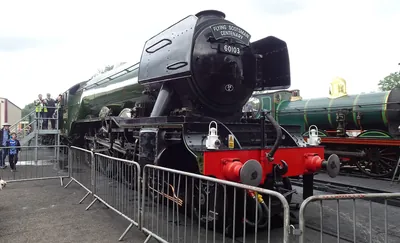 LNER Class A3 60103 Flying Scotsman Bluebell Railway.jpg
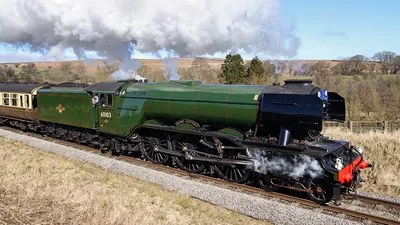
by BWard 1997, CC BY 4.0. Cropped and resized; no other changes.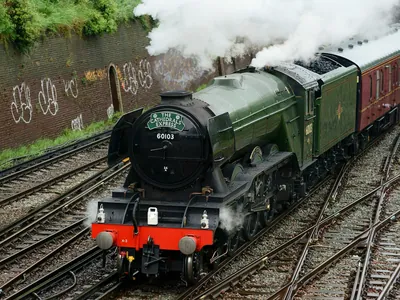 No.60103 'Flying Scotsman' (27399693905).jpg
by Peter Trimming, CC BY 2.0. Cropped and resized; no other changes.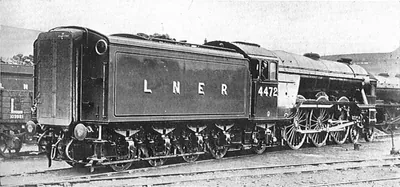 LNER pacific 4472 Flying Scotsman, with corridor tender (CJ Allen, Steel Highway, 1928).jpg
by From C. J. Allen, The Steel Highway (1928), scanned by Andy Dingley, Public domain. Cropped and resized; no other changes.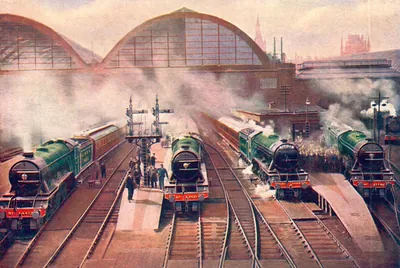 Morning rush from King's Cross (CJ Allen, Steel Highway, 1928).jpg
by From C. J. Allen, The Steel Highway (1928), scanned by Andy Dingley, Public domain. Cropped and resized; no other changes.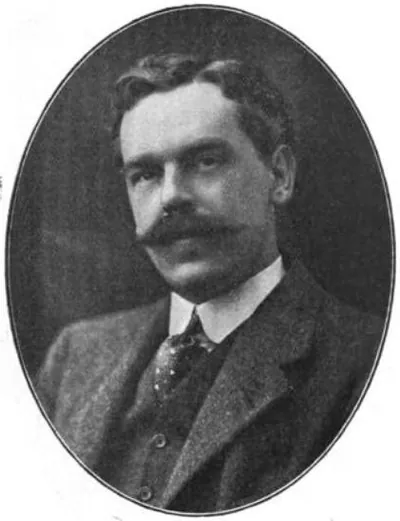 Herbert Nigel Gresley (1876–1941).png
by Unknown photographer, Public domain. Cropped and resized; no other changes.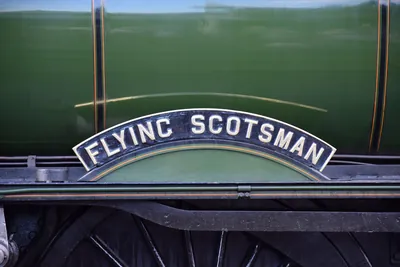 60103 Nameplate.jpg
by hugh llewelyn, CC BY-SA 2.0. Cropped and resized; no other changes. Shared here under the same licence.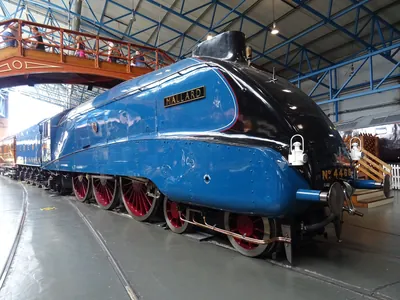 LNER Class A4 4468 Mallard National Railway Museum.jpg
by BWard 1997, CC BY 3.0. Cropped and resized; no other changes.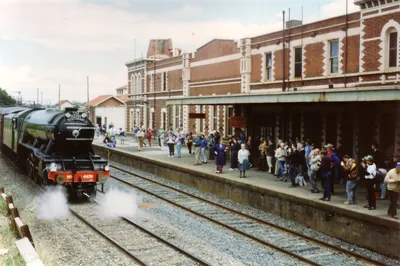
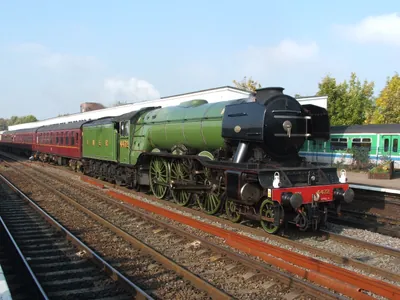
 LNER Class A3 4472 Flying Scotsman (26138908966).jpg
by Charlie Jackson, CC BY 2.0. Cropped and resized; no other changes.
Our own drawings
- Six small side-view drawings of the same steam locomotive in different colours. 1923: number 1472, LNER Apple Green. 1924: number 4472, now named Flying Scotsman, Apple Green. The Second World War: wartime black, like all railway stock. 1948: number 60103 for British Railways, blue for a time, then BR Green. 1963: bought by Alan Pegler and back in LNER colours. 2016 to today: number 60103 again, in BR Green.
Our own drawing - A side-view drawing of a steam locomotive, its tender and the first carriage. A dashed gold arrow runs from the carriage, through a narrow passage along the side of the tender, to the cab of the locomotive. Labels: the fresh crew walks from the train, through a narrow passage in the tender, to the footplate, so the train need not stop.
Our own drawing - A bar chart of steam speeds in miles per hour, with bars starting at 60mph. Flying Scotsman, 1934: 100mph, first officially in the UK. City of Truro, 1904: 102mph, claimed. The LMS before 1938: 114mph, the British record before Mallard. Germany, May 1935: 124.5mph, the world record before Mallard. Mallard, 3 July 1938: 126mph, the steam world record, still standing.
Our own drawing - A simple line on a green background from London King’s Cross to Edinburgh Waverley, labelled non-stop, about eight hours. A note says it is our schematic of the East Coast Main Line, not to scale, with the stations between left out.
Our own drawing
The drawings are simplified teaching drawings, not to scale, made from the sourced descriptions on this site. Useless the eraser is the network’s own mascot. Fonts: Bricolage Grotesque, Newsreader and Kalam (SIL Open Font Licence), served from this site.