From No. 1472 to the most famous train in the world
A new railway, a new engine and a name borrowed from a train that had run since 1862.
How this site works. Every fact is in our own words and linked to its source, beside it. Where good sources disagree, we show each version in a “Sources differ” box.
A new railway’s first engine
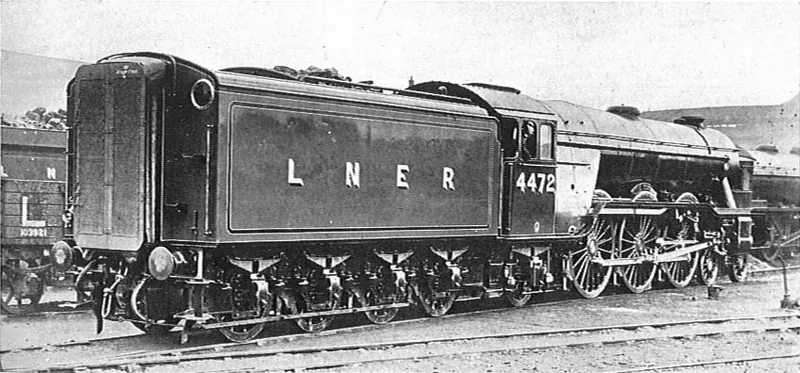
It was the first locomotive of the newly formed London and North Eastern Railway, the LNER. NRM
Flying Scotsman was built in 1923 at Doncaster Works, and it cost £7,944. NRM
It was designed by Sir Nigel Gresley as one of his A1 class, the most powerful locomotives the LNER had at the time. NRM
When did it start work? Sources differ
- The National Railway Museum’s history page says it went into service on 24 February 1923, numbered 1472. NRM
- A National Railway Museum press release from 2016 says it was ‘outshopped’ from Doncaster Works as number 1472 on 27 February 1923. NRM, 2016
Both come from the National Railway Museum. “Outshopped” means leaving the works; going into service can be recorded differently, so we give both dates.
A name from a famous train
A fault was found in its first year and it was taken out of service, then refitted and renumbered for the British Empire Exhibition at Wembley. NRM blog, 2023
By 1924, picked to appear at the British Empire Exhibition in London, it had been renumbered 4472 and named Flying Scotsman. NRM
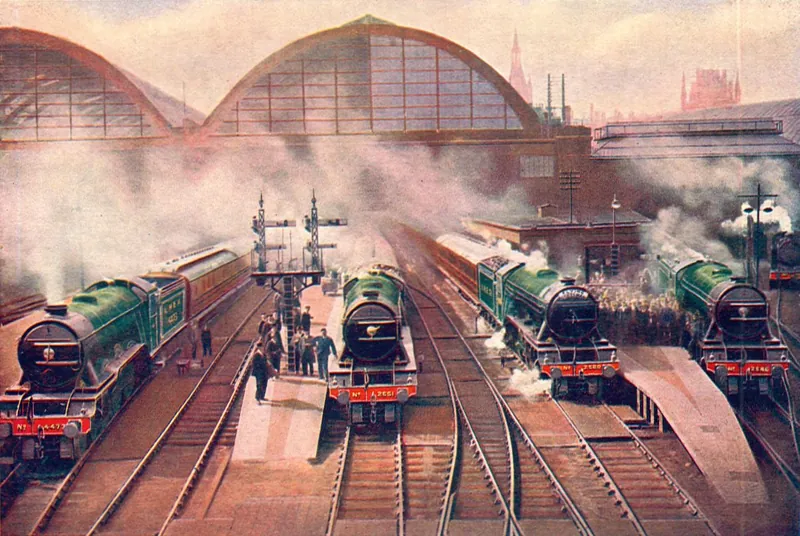
The name came from the daily 10.00 train from London to Edinburgh, a service that started in 1862. NRM
Flying Scotsman is also a passenger service that has run on the East Coast Main Line between London and Edinburgh since 1924. NRM, 100 Voices Before 1924 that service was known as the Special Scotch Express, which dates back to 1862. NRM, 100 Voices
The Special Scotch Express was nicknamed ‘the Flying Scotchman’ as early as 1862; railwaymen tended to call it ‘the 10am’, the time the two trains left Edinburgh and London. NRM, 100 Voices
The British Empire Exhibition
The exhibition made Flying Scotsman famous, and the LNER went on to use it in many more publicity events. NRM
A coloured print from about 1924, now in the Science Museum Group Collection, shows it in the colours it wore at the British Empire Exhibition at Wembley. Science Museum Group
A silver medal made in 1924 shows the locomotive with its number 4472, noting it was originally 1472 and designed by H N Gresley. Science Museum Group
On 12 August 1925, at the exhibition at Wembley Park, King George V and Queen Mary asked to see inside its cab, and the King sat in the driver’s seat. NRM, 2023
Non-stop to Edinburgh, 1928
In 1928 it was given a new tender with a corridor, so a fresh crew could take over without the train stopping. NRM
On 1 May 1928 it hauled the first ever non-stop London to Edinburgh service, cutting the journey to eight hours. NRM
Before that first non-stop run, the Lord Mayor of London stood on the footplate with Nigel Gresley, Driver Pibworth and William Teasdale. NRM
The LNER advertised the service as ‘The Most Famous Train in the World’. NRM blog, 2023
Its trains carried new comforts such as a cinema car, a cocktail bar and a hairdressing salon. NRM blog, 2016
It starred in British cinema’s first ‘talkie’, in 1929. NRM blog, 2016
Into the record books
In 1934 it was clocked at 100mph on a special test run, officially the first locomotive in the UK to reach that speed. NRM
The run showed the LNER’s directors that steam could give high speeds, which ended a plan to use diesel power on its fast services. NRM
The full story of the speed records is on the records page.
War, peace and British Railways
In the Second World War it was painted wartime black, like all railway stock. NRM
After the war it was green again and was rebuilt as an A3 Pacific. NRM
British Railways was formed in 1948, and Scotsman, now number 60103, was painted blue for a time, then BR Green. NRM
British Rail retired it in 1963, after 40 years of pulling trains, as steam engines were becoming old-fashioned. NRM
Next: the engine →