Gresley’s A1, rebuilt as an A3
A big, powerful express engine of the 1920s, now the only one of its class left.
How this site works. Every fact is in our own words and linked to its source, beside it. Where good sources disagree, we show each version in a “Sources differ” box.
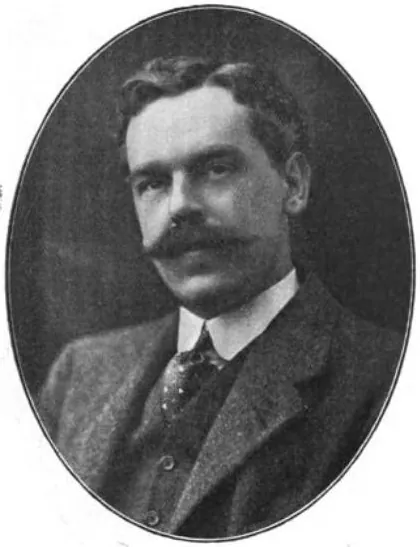
The designer
It was designed by Sir Nigel Gresley as one of his A1 class, the most powerful locomotives the LNER had at the time. NRM
Gresley was born in Edinburgh. BBC, 2023
Gresley (1876–1941) was the LNER’s Chief Mechanical Engineer, and the A4 locomotive No 4498 was named after him. NRM, Mallard
A Pacific
It was among the first of Gresley’s 4-6-2 ‘Pacific’ locomotives built for the LNER. BBC, 2023
It is the only one of its class that has been preserved. BBC, 2023 The National Railway Museum calls it the sole survivor of its class. NRM, 2016
Our own note: 4-6-2 counts the wheels on each side, from the front, with “Pacific” being the nickname for that layout. How a steam locomotive works is explained on steam.mechanics.im.
Size
It is 70ft long, about 21 metres. BBC, 2016
How heavy is it? Sources differ
- The National Railway Museum gives its weight as 97 tonnes. NRM
- A BBC report from 2016 says it weighs about 96 tonnes. BBC, 2016
- The BBC gives its top speed as 100mph. BBC, 2016
The National Railway Museum’s history page says 97 tonnes; the BBC in 2016 says about 96 tonnes, and a museum blog of the same year says 96 tons. Weights vary with what is on board and how they are measured.
Rebuilt, again and again
After the war it was green again and was rebuilt as an A3 Pacific. NRM The National Railway Museum dates its conversion to the A3 class to 1947. NRM, 2023
Over its life it has had a constant turnover of parts, with changes to let it run in the 21st century. NRM blog, 2016
It was changed back to a single chimney and painted in LNER colours again, with a corridor tender and permission to run on the main line. NRM
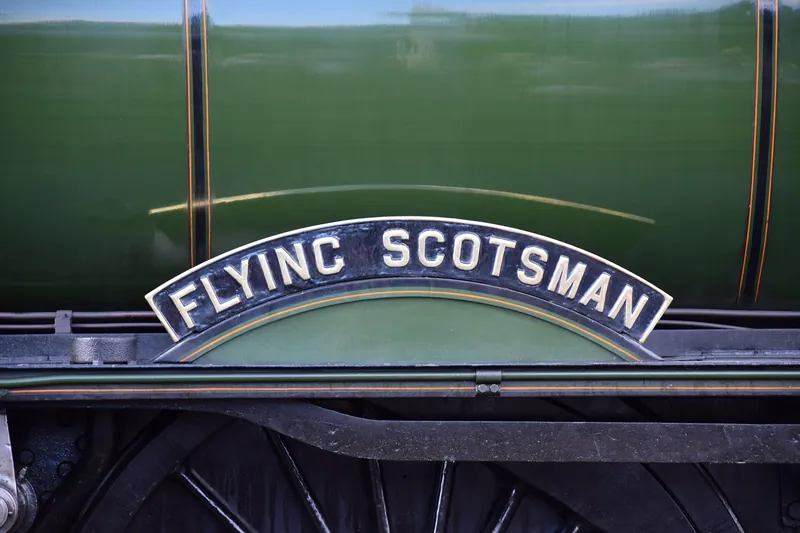
The colours
LNER passenger locomotives had always been painted Apple Green. NRM
In the Second World War it was painted wartime black, like all railway stock. NRM
British Railways was formed in 1948, and Scotsman, now number 60103, was painted blue for a time, then BR Green. NRM
The BR green chosen in 2016 reflects how it looked in the 1950s and early 1960s. BBC, 2016
Repainting it by hand took about 20 litres of undercoat, 30 litres of gloss and around 20 litres of varnish. BBC, 2016
It took 10 days to strip off the black paint and repaint it green. BBC, 2016
Next: the records →